Short answer: Yes!
Boosting butyrate through diet, microbiome health, and potentially supplements can help improve immune regulation; protect the gut barrier; reduce the autoimmune attack on pancreatic beta cells.
Longer answer, including some citations at the end:
Butyrate has several important effects in the gut that may help prevent or slow autoimmune diabetes and modulate immune function in type 2 diabetes as well. Here’s how it works in the context of gut health and autoimmunity:
Immune Regulation in the Gut
Butyrate promotes immune tolerance by:
- Increasing regulatory T cells (Tregs) (these cells calm autoimmune responses by preventing immune cells from attacking the body’s own tissues, including insulin-producing beta cells in the pancreas.)
- Reducing pro-inflammatory immune cells (Butyrate suppresses Th17 cells and inflammatory cytokines (like IL-6, TNF-α), which are involved in autoimmune damage in T1D.)
Improves Gut Barrier Function (“Seals the Leaky Gut”)
Increased intestinal permeability (“leaky gut”) allows toxins and antigens to enter the bloodstream, which can trigger or worsen autoimmune reactions. Butyrate:
- Tightens junctions between gut cells (Prevents immune exposure to gut antigens that might trigger autoimmunity.)
- Promotes mucin production (Strengthens the protective mucus layer in the intestines.)
Supports Healthy Gut Microbiome Balance
- Butyrate is produced by beneficial bacteria like Faecalibacterium and Roseburia.
- Higher butyrate levels of butyrate suppress growth of inflammatory microbes, helping maintain an anti-inflammatory gut ecosystem.
Potential Protection of Pancreatic Beta Cells
I am no expert in this but from some google scholar searching, emerging research (mostly in animal models) shows butyrate may:
- Protect beta cells from autoimmune destruction
- Improve insulin sensitivity
- Reduce systemic inflammation that contributes to both type 1 and type 2 diabetes
Butyrate’s Benefits for Autoimmune Diabetes
| Mechanism | Benefit |
|---|---|
| ↑ Tregs | Immune tolerance, beta cell protection |
| ↓ Inflammation | Less autoimmune attack on pancreas |
| Gut barrier integrity | Prevents immune system overactivation |
| Modulates microbiome | Less dysbiosis, more SCFA-producing bacteria |
| Epigenetic effects (HDAC inhibition) | Long-term immune regulation and gene expression changes |
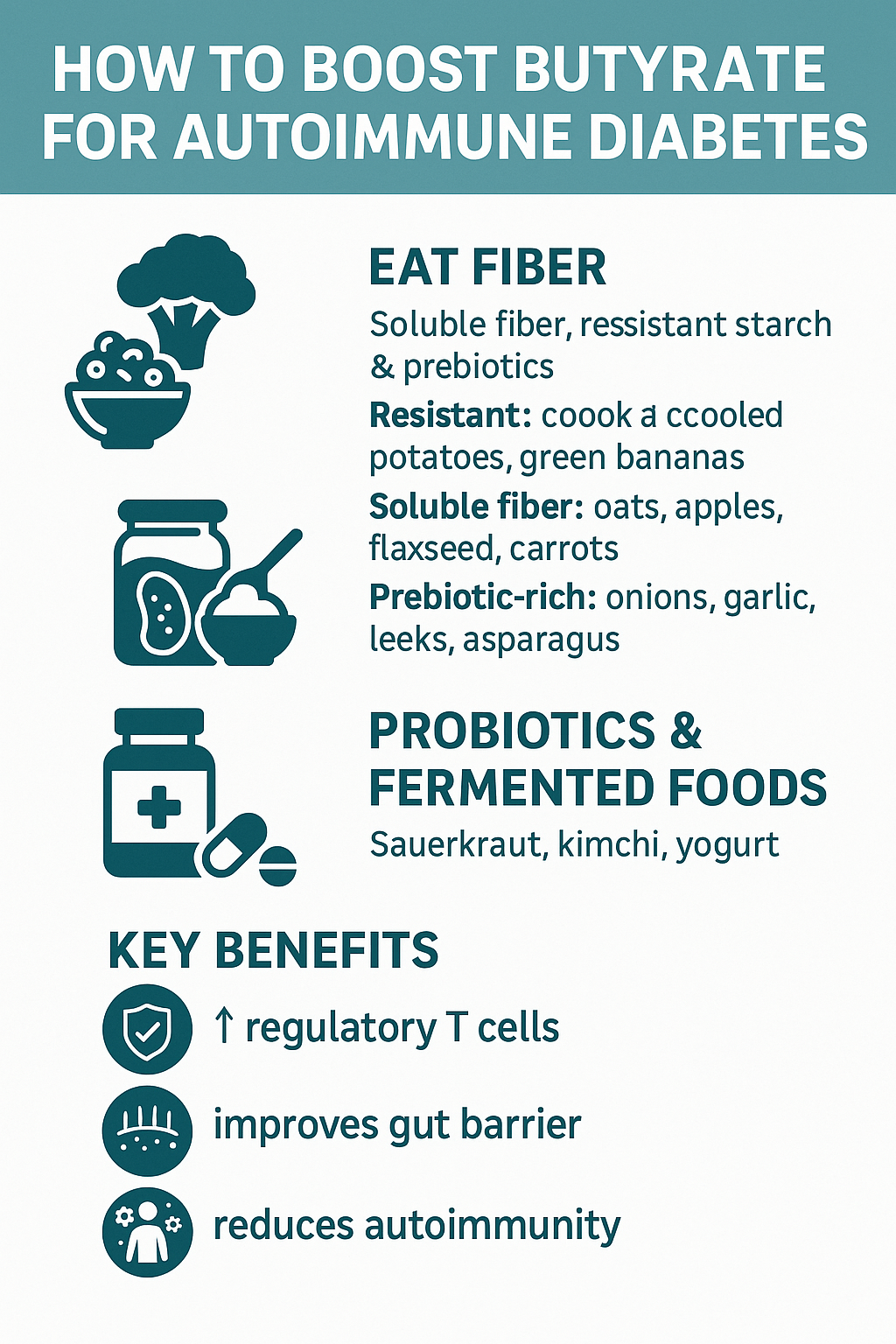
HOW TO BOOST BUTYRATE NATURALLY (Especially in Autoimmune Diabetes): Eat Fiber That Feeds Butyrate-Producing Bacteria
Focus on soluble fiber, resistant starch, and prebiotics:
| Food Group | Examples |
|---|---|
| Resistant Starch | Cooked and cooled potatoes, green bananas, cooked/cooled rice, lentils |
| Soluble Fiber | Oats, apples, carrots, flaxseed, beans, psyllium |
| Prebiotic-rich | Onions, garlic, leeks, asparagus, chicory root, Jerusalem artichoke |
| Polyphenols (support microbiome) | Berries, green tea, cacao, olives, red cabbage |
See here for a list I compiled of foods high in FOS.
Support butyrate-producers by creating the right ecosystem:
- Fermented foods: Sauerkraut, kimchi, kefir, yogurt
- Probiotic supplements: Especially those with Lactobacillus plantarum, Bifidobacterium infantis, etc.
Butyrate suppleementation is also an option – this is good for those with damaged guts, so maybe helps T1D although not strong evidence for this yet. Supplements with Sodium butyrate or tributyrin (delayed-release versions work best). I like TributyrinX Biome Builder by Healthy Gut Supplements.
Selected studies and references
About gut dysbiosis & T1D: Vatanen et al. (2018, Nature). Found that children who developed T1D had a lower abundance of butyrate-producing bacteria.
🔗 DOI: 10.1038/s41586-018-0620-2
About butyrate enhances Tregs and reduces autoimmunity: Furusawa et al. (2013, Nature)
Butyrate induces colonic regulatory T cells via histone deacetylase inhibition.
🔗 DOI: 10.1038/nature12721
Butyrate protects against T1D in animal studies: Zhao et al. (2018, Cell Metabolism)
SCFA treatment (acetate + butyrate) delayed onset of diabetes in mice by enhancing Tregs and improving gut barrier.
🔗 DOI: 10.1016/j.cmet.2018.06.011
Diet impacts SCFAs in human diabetes: De Groot et al. (2020, The Lancet Diabetes & Endocrinology)
High-fiber diets altered SCFA production and improved glycemic control in people with type 2 diabetes.
🔗 DOI: 10.1016/S2213-8587(20)30157-2
 Happy Apple Nutrition
Leave a comment