Short-chain fatty acids (SCFAs) are substances that play crucial roles in gut, immune, and brain health. Examples like acetate, propionate and especially butyrate are produced in the colon when specific types of gut bacteria ferment fiber.
How are SCFAs made?
First, we eat fiber. Different types of fiber like soluble fiber and resistant starches are considered prebiotics because they are food for good bacteria.
I wrote about one important prebiotic a few years back called Frutco-oligosaccharide (“FOS”).
Many nutrients are absorbed in our small intestine but fibers pass through undigested.
Next, colonic fermentation occurs. In the colon, certain gut bacteria (e.g., Faecalibacterium prausnitzii, Roseburia, Eubacterium) ferment these fibers.
This fermentation process produces SCFAs, especially butyrate, propionate, and acetate.
SCFAs are absorbed by colon cells (colonocytes) and exert effects in that area like repairing the gut lining. Something I find very cool is when in excess they enter the bloodstream, exerting effects systemically, like in the brain and helping the immune system!
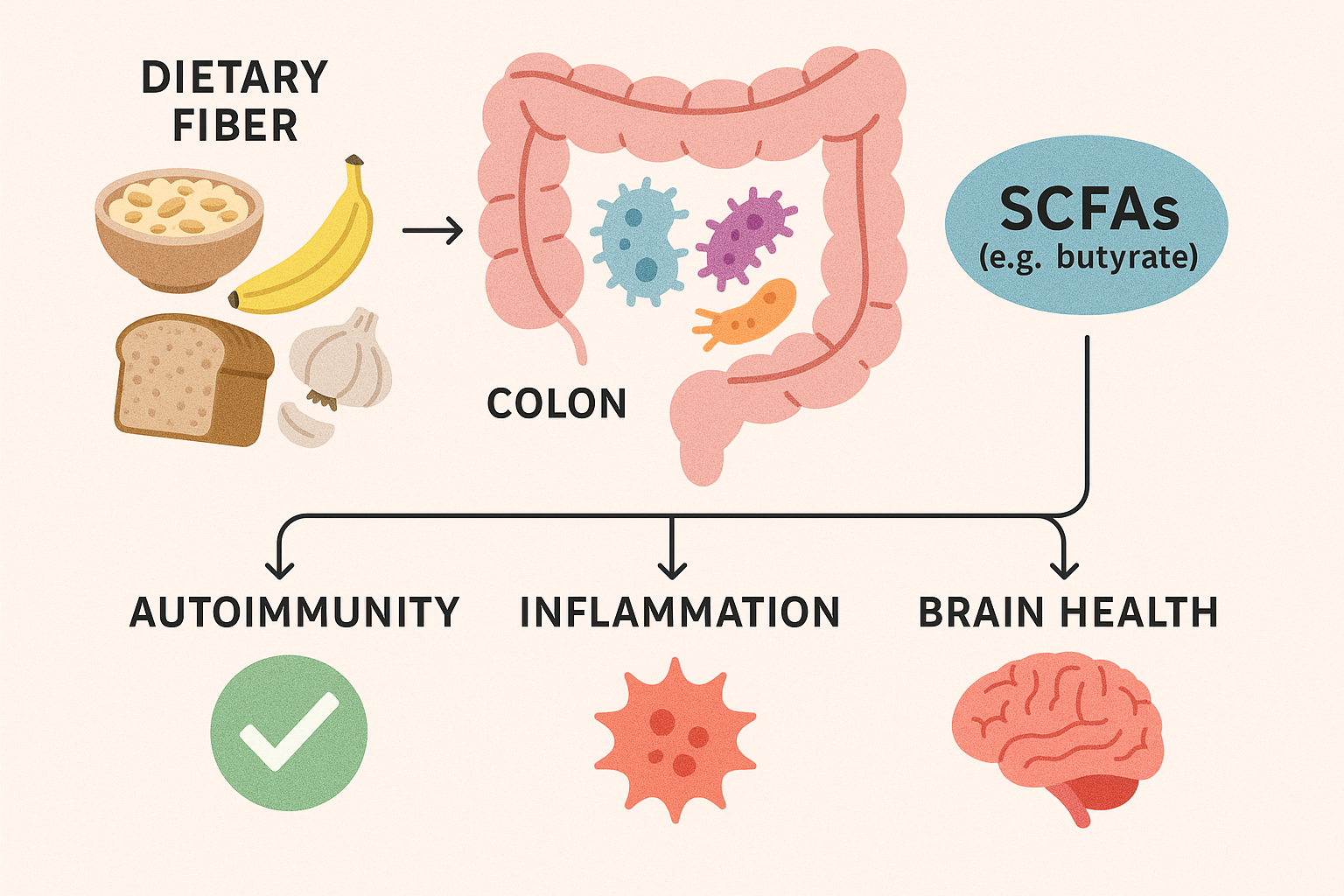
SCFAs like butyrate cross the blood-brain barrier and influence brain function:
Gut-brain axis modulation SCFAs interact with the vagus nerve, influencing mood and cognitive function.
Neuroprotection
Anti-inflammatory effects in the brain ( reducing neuroinflammation, which is relevant in conditions like depression, Alzheimer’s disease, and Parkinson’s)
Butyrate modulates the immune system in several powerful ways:
- Supports gut barrier integrity
→ Butyrate strengthens the gut lining by promoting tight junction proteins, preventing “leaky gut,” which is linked to chronic inflammation and autoimmune triggers. - Enhances regulatory T cells (Tregs) (this is important because Tregs help suppress inappropriate immune responses, thereby reducing autoimmunity conditions like multiple sclerosis, rheumatoid arthritis).
- Inhibits pro-inflammatory cytokines
Butyrate blocks NF-κB, a key inflammatory pathway, and reduces IL-6 and TNF-α levels.
| System | Butyrate’s Role |
|---|---|
| Gut | Feeds colon cells, strengthens barrier, prevents dysbiosis |
| Immune | Promotes Tregs, reduces inflammation, modulates autoimmunity |
| Brain | Improves cognition, reduces neuroinflammation, supports mood |
You can probably guess where I am going with this. Consume fiber to feed your “protector bacteria” that produces short chain fatty acids like butyrate. See here for a list I compiled of foods high in FOS.
What if you cannot tolerate eating these fiber rich foods? They give you gas or make you feel inflamed, or maybe you feel better following a low FODMAP diet? Please know that all bacteria – beneficial and commensal and pathogenic – eat fiber. So having an adverse reaction to consuming more fiber is a sign that your microbiome is out of balance- you may have an overgrowth of pathogenic bacteria, yeast or otherwise. This can be a good time to do a comprehensive stool test called the GI-Map, which I can order for you and the report provides a lot of information in addition to your signs, symptoms and health history that can guide your healing journey.
Taking a straight butyrate supplement is also an option, I like TributyrinX Biome Builder by Healthy Gut Supplements. It is specially formulated to pass through the small intestine all the way to the colon and open up there to provide benefits in the colon.
 Happy Apple Nutrition
Leave a comment